

『K Factor Calculator Flow Meter Tool: Instantly Transforming Pulses Per Liter into Accurate Volumetric Units』Related information(clamp on meter|electromagnetic meter|venturi meterrotameter|orifice meter|ultrasonic flow meter|mass flow meter|coriolis mass flow meter|coriolis flow meter|magnetic flow meter|magmeter flow meter|magflow flow meter|mag meter flow meter|electromagnetic flow meter|vortex flow meter|turbine flow meter|thermal mass flow meter|thermal flow meter|rotameter flow meter)

K Factor Calculator Flow Meter Tool: Instantly Transforming Pulses Per Liter into Accurate Volumetric Units
Quick Answer: The K Factor Calculator converts pulses per liter from your flow sensor into a usable K factor for a totalizer, PLC, or flow computer. Enter your pulse output and flow range to get a K factor that matches your process conditions. This removes setup errors on electromagnetic, vortex, oval gear, and turbine flow meters.
Silver Automation Instruments provides this online K Factor tool for engineers and technicians. A K factor is the number of pulses a flow meter emits per liter or per cubic meter. If that number is wrong in your control system, every volume total and batch stop will be wrong. We have seen this on customer sites many times.
What the K Factor Calculator Does
Enter your raw pulse count per unit volume. The calculator outputs the K factor in pulses per liter, pulses per cubic meter, or pulses per gallon. It handles DN15 to DN300 pipe sizes and flow ranges from 0.1 to 3000 m3/h. Most engineers skip the manual math because a small decimal shift changes the totalized volume. A paint manufacturer in Southeast Asia had a batch controller reading 3.8 percent low. The root cause was a K factor taken from a manual without checking the tag plate. A quick calculator check corrected the batch accuracy.
Why Pulses Per Liter Matter
Pulse output flow meters send a frequency signal to a PLC or flow computer. The K factor is the bridge between that frequency and the volume you want to record. A DN50 oval gear meter on diesel can have a K factor near 2.54 pulses per mL. A DN100 electromagnetic meter on cooling water may show 0.09 pulses per liter depending on pulse scaling. Because values vary by meter type and pipe size, a wrong K factor is not rare. A customer in Vietnam asked us about a seawater flow meter for a desalination plant. The PLC showed 112 m3/h but a bucket test gave 104 m3/h. The K factor was corrected and the totalizer matched the physical batch.
How to Use the K Factor Calculator
Start by recording the pulse output from your flow meter datasheet or calibration sheet. Then confirm the engineering unit. Pulses per liter and pulses per cubic meter differ by 1000. Also enter the flow range and pipe size. The tool returns the K factor and a quick check value for a 4-20 mA HART loop. Here is the thing. Some flow meters have programmable pulse scaling in the electronics. If you set one pulse per 10 liters, the K factor in the PLC must match that setting. Otherwise the PLC totalizer will drift. A chemical distributor in the Philippines had this issue on a turbine meter for solvent loading. The board pulse scaling was set but the PLC used a different factor. The calculator helped them see the mismatch in minutes.
Common Mistakes When Entering Pulse Data
One common error is swapping the numerator and denominator. A K factor of 0.05 pulses per liter becomes 20 liters per pulse if inverted. Another error is ignoring temperature and density changes on gas or steam applications. A vortex flow meter on compressed air at 7 bar needs the flow computer set to actual density, not the handbook value. Most engineers skip this part during loop checks. A mismatch of a few percent can cost a batch. We have helped plants in Mexico and B
Flow Meter Types That Benefit From K Factor Correction
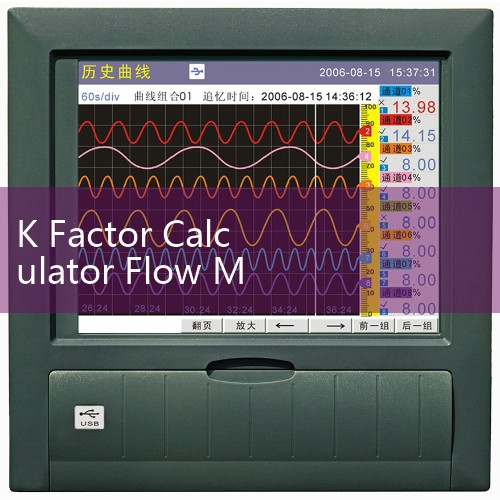
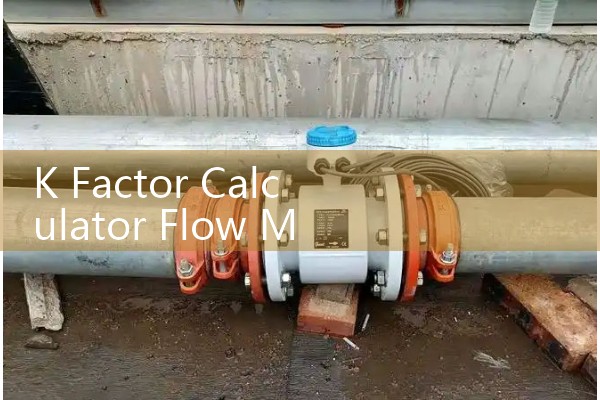
Electromagnetic flow meters often use a factory set pulse rate. Oval gear and turbine meters output a raw frequency proportional to displacement. Vortex meters need a K factor matched to the bluff body and pipe Reynolds number. Thermal mass flow meters for gas can output a pulse signal with a programmable K factor. Coriolis mass flow meters can send pulses that represent volume or mass. A food and beverage plant that batches syrup uses an oval gear meter with the correct K factor to prevent overfill. A water treatment plant in Indonesia uses an electromagnetic meter with correct pulse scaling to feed a paperless recorder and SCADA totalizer. The K factor is the common reference for both readings.
A Real Example From a Customer Site
Last year a customer in Vietnam asked about a DN80 electromagnetic flow meter for a chemical dosing line. The PLC showed 480 L per batch but the actual barrel fill was 455 L. The pulse output was set to 0.1 L per pulse. The PLC programmer entered 20 pulses per liter instead of 10. The K Factor Calculator showed the correct value in seconds. After the register update the batch matched the physical amount. Many OEM skid builders in Thailand and Saudi Arabia use Silver Instruments flow meters with pulse output. They send us the flow range, pipe size, and fluid type. We return the K factor and the recommended pulse scaling. The calculator tool is a quick first step before formal calibration.
Support From Silver Instruments
Silver Automation Instruments supplies electromagnetic, vortex, oval gear, Coriolis, ultrasonic, and thermal mass flow meters. We also supply pressure transmitters and paperless recorders. Each flow meter ships with a calibration certificate and the factory K factor on the tag plate. If the tag is damaged, we can recheck the serial number and provide the original K factor. Send us your pressure in bar, temperature in degrees Celsius, pipe size in DN, and flow range in m3/h or kg/h. Also include your pulse output setting if the meter has one. Contact Silver Instruments at Tel: +86-25-68650347, Whatsapp: +86-25-52155837, or WeChat: +86 15365082610.
FAQ
What is a K factor in a flow meter?
A K factor is the number of pulses per unit volume. It links the sensor frequency to the totalizer volume.
How do I calculate K factor from pulses per liter?
Record total pulses over a known volume. Divide the pulse count by that volume. For example, 2500 pulses for 500 liters gives 5 pulses per liter.
Can the K Factor Calculator work for liquid and gas flow meters?
Yes. For liquid meters like oval gear and electromagnetic types, it is direct. For gas meters, confirm reference conditions because density changes affect pulse output.
What if my flow meter has a programmable pulse output?
Set the pulse scale in the meter and enter the same value in the PLC. The calculator helps you confirm that the final K factor matches your totalizer.
Does Silver Instruments provide K factor data for old flow meters?
Yes. Send us the serial number and the flow meter model. We can often retrieve the original K factor from our production record.
 Hot Product
 Related AD