

『Krohne Ultrasonic Flow Meter Setup: Non-Invasive Clamp-On Transit-Time Transducer Layouts』Related information(clamp on meter|electromagnetic meter|venturi meterrotameter|orifice meter|ultrasonic flow meter|mass flow meter|coriolis mass flow meter|coriolis flow meter|magnetic flow meter|magmeter flow meter|magflow flow meter|mag meter flow meter|electromagnetic flow meter|vortex flow meter|turbine flow meter|thermal mass flow meter|thermal flow meter|rotameter flow meter)
Krohne Ultrasonic Flow Meter Setup: Non-Invasive Clamp-On Transit-Time Transducer Layouts
Quick Answer: For Krohne clamp-on ultrasonic flow meters, the most common non-invasive transducer layouts are the Z method, the V method, and the W method. Z method works best on pipes above DN100 with clean liquid. V method suits DN25 to DN100 pipes. W method helps on small lines or when flow velocity is lower than 0.3 m/s. Silver Instruments supplies alternative clamp-on transit-time meters with similar layout logic.
Transducer Layouts Used in Krohne Clamp-On Transit-Time Meters
The Z method sends the ultrasonic signal directly across the pipe. One transducer sits upstream and one sits downstream on the opposite side. This layout gives the shortest signal path and works well on DN100 to DN1200 pipe. It is common in raw water and wastewater plants in Vietnam and Indonesia.
The V method reflects the signal off the pipe wall. Both transducers sit on the same side of the pipe. This layout suits DN25 to DN100 pipes. You often see V method in chemical dosing lines and food and beverage transfer lines where pipe diameter is smaller. It improves the time difference measurement because the signal travels a longer path.
The W method bounces the signal twice across the pipe. It extends the path even more and increases the time difference. Use W layout on DN15 to DN50 lines or when flow velocity is lower than 0.3 m/s. The signal attenuation is higher in W method so pipe surface preparation must be very clean.
Some Krohne clamp-on transmitters also allow an N method. It sends the signal across the pipe three times or more. This layout can improve accuracy on large pipes with limited straight run length. In practice most engineers skip N method unless the pipe condition is excellent.
Pipe Data and Transducer Spacing for Krohne Setup
Enter the actual pipe outside diameter, wall thickness, liner material, and liquid type into the transmitter. Do not guess the wall thickness. A 1 mm error on a DN80 carbon steel pipe shifts the transducer spacing enough to drop signal strength. Krohne transmitters usually calculate the spacing after you enter these values. For most water lines, the spacing for Z method on DN100 with 6 mm wall is around 90 mm but always use the transmitter value.
Measure the pipe circumference with a flexible tape. Do not use a ruler across the pipe. Mark the transducer positions with a permanent marker. Clean the surface down to bare metal. Then apply a thin layer of couplant. Too much couplant traps air bubbles. Too little couplant creates dead zones.
Setup Steps for Z and V Layouts
First set the transmitter to the correct transducer frequency. For DN50 to DN200 pipe, 1 MHz transducers are common in Krohne setups. For larger pipes up to DN1200, 0.5 MHz transducers give better penetration. Then select the layout type in the menu. For Z method, mount transducer A upstream on one side and transducer B downstream on the opposite side. For V method, mount both on the same side and let the transmitter guide the spacing.
Wait for the signal strength and sound velocity readings. A good clamp-on installation shows signal strength above 60 percent on most Krohne transmitters. If the signal is below 40 percent, recheck the spacing, couplant, and pipe alignment. Rotate transducers one to two degrees if needed. This fine tune often recovers signal on old cement-lined ductile iron pipes.
Common Mistakes on Existing Krohne Clamp-On Installations
We have seen this on customer sites many times.
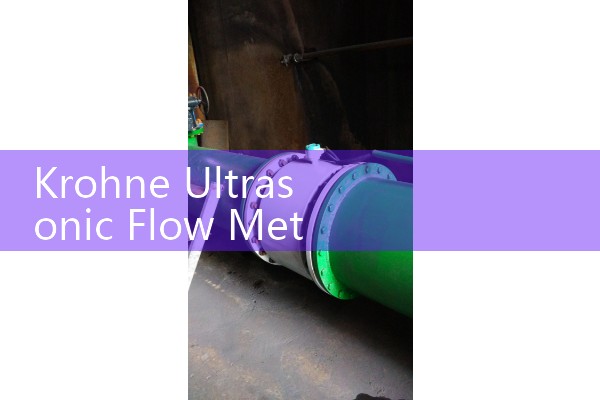
In one food processing plant in Thailand, the transducer spacing was correct but the pipe was not full during startup. The clamp-on meter read flow only after the line pressure increased and air bubbles cleared. For a reliable setup the pipe must be full and the liquid must not contain large gas pockets.
Silver Instruments Clamp-On Transit-Time Flow Meters
Silver Instruments supplies non-invasive clamp-on transit-time ultrasonic flow meters for liquid applications. Our meters accept pipe sizes from DN25 to DN1200 and support Z, V, W, and N transducer layouts. The setup logic is similar to Krohne. You enter pipe OD, wall thickness, liner, liquid, and temperature. The transmitter calculates transducer spacing automatically.
Our customers use these meters for raw water, demineralized water, diesel, palm oil, and chemical transfer. We have quoted clamp-on meters for palm oil at 70 cP and 40 °C, for sulfuric acid at 10 cP, and for demineralized water with conductivity below 5 µS/cm. The transducer layout changes with viscosity and pipe size. Low viscosity liquids below 5 cP often work with Z or V method. Higher viscosity above 30 cP may need V or W method to keep the signal stable.
We offer outputs like 4-20 mA HART, pulse, and RS485. For hazardous areas we can supply ATEX Zone 1 approved sensors. Send us your pipe OD, wall thickness, liquid type, temperature, and flow range. We will recommend the right transducer layout and meter model.
Contact Silver Instruments: Tel: +86-25-68650347 | WhatsApp: +86-25-52155837 | WeChat: +86 15365082610
FAQ: Krohne Clamp-On Transit-Time Transducer Setup
1. Which transducer layout should I use for DN80 water pipe?
Use the V method for DN80. It gives a longer signal path and better time difference on smaller pipes. You can switch to Z method if the signal strength is low.
2. Can I use Krohne clamp-on meters on cement-lined ductile iron pipe?
Yes, but only if the liner is bonded tightly to the pipe wall. Air gaps or loose liner cause signal loss. Use lower frequency transducers and check sound velocity readings.
3. What is the minimum pipe size for clamp-on transit-time meters?
Most Krohne clamp-on meters work from DN15 with W method. For DN15 to DN50, use the W layout and a higher frequency transducer set. Flow velocity should be above 0.2 m/s for a stable reading.
4. Do I need to shut down the pipe for transducer installation?
No. That is the main advantage of non-invasive clamp-on meters. You install the transducers on the outside of the live pipe. The pipe must be full of liquid during setup.
5. How do I know the transducer spacing is correct?
Enter accurate pipe data and let the transmitter calculate spacing. Then check signal strength and sound velocity. A stable signal above 60 percent and a sound velocity close to the liquid reference value mean the spacing is correct.
For more technical help with your Krohne setup or a Silver Instruments alternative, contact us at Tel: +86-25-68650347, WhatsApp: +86-25-52155837, or WeChat: +86 15365082610.
 Hot Product
 Related AD