
 About Us
Coriolis Flow Sensors for Compact OEM Inline Chemical and Oil Blending
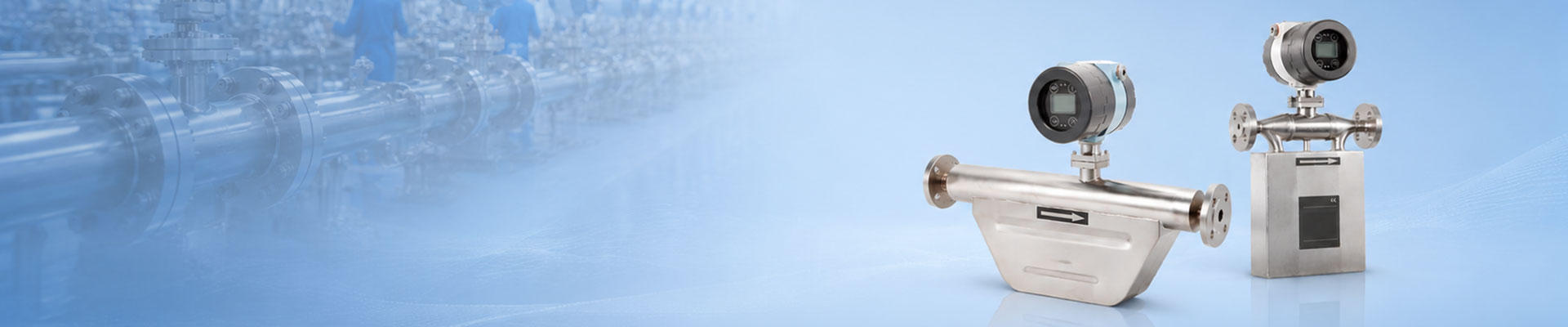
Quick Answer: Compact Coriolis flow sensors from Silver Automation Instruments measure mass flow, density, and temperature in one inline device. They suit OEM blending systems for chemicals, lubricants, fuels, and paints. You get 4-20 mA HART and RS485 Modbus outputs with no moving parts exposed to wear.
Most inline chemical blending skids fail when the flow measurement drifts. A small offset in mass flow changes the final blend ratio. Silver Instruments sells compact Coriolis transducers for OEM builders who need repeatable blend control on DN15 to DN50 lines.
Why OEM Buyers Use Compact Coriolis on Blending Skids
A compact Coriolis sensor has no rotors, no gears, and no bearings. You measure the actual mass in kg/h. The same sensor reports density in g/cm3 and temperature in °C. This data catches solvent carryover, water contamination, and wrong oil grades before the batch leaves the mixer.
In practice, a paint manufacturer in Indonesia used three SIL-CM015 meters on a 2 inch solvent blending line. The line runs at 6 bar and 40 °C. Before the change, they checked viscosity by hand once per shift. Now the control panel checks density every 200 ms and stops the batch if the value drifts by 0.002 g/cm3.
Key Parameters for Chemical and Oil Blending
Inline blending systems need more than a flow totalizer. Specify the viscosity range because chemical blends often run from 1 cP for thin solvents to 500 cP for heavy fuel oil. Specify density span if the same meter handles multiple products. A Silver Instruments SIL-CM series sensor handles density from 0.5 g/cm3 to 1.5 g/cm3 on request.
Pressure rating matters on oil blending skids. Most systems run at 10 bar to 25 bar. The compact sensor bodies are rated for PN40 as standard. Temperature is another issue. Hot oil lines at 120 °C to 150 °C need stable zero point performance. The built in PT100 temperature measurement compensates the meter and reports process temperature over 4-20 mA HART.
Matching Sensor Size to Your Blend Line
Do not oversize the meter. An oversized Coriolis sensor loses accuracy at low flow. For pilot skids and additive injection, use the SIL-CM015 with DN15 connections. It measures 0 to 1200 kg/h with mass flow accuracy of ±0.1 percent of rate. For production lines from 300 kg/h to 6000 kg/h, use the SIL-CM025 with DN25 connections. It has the same density accuracy and a faster settling time on viscous oil.
Here is the thing: most OEM buyers skip the pressure drop check. Compact Coriolis meters have a smaller pressure loss than many engineers expect at low viscosity. A DN15 SIL-CM meter at 800 kg/h on diesel adds about 0.3 bar pressure drop. At 200 cP oil the loss is higher. Send us your viscosity in cP and we will select the right bore.
Outputs and Panel Integration
Silver Instruments compact Coriolis transducers ship with 4-20 mA HART, pulse, and RS485 Modbus RTU. The pulse output gives a direct batch total to a PLC. The HART signal carries mass flow, density, temperature, and diagnostic codes. ATEX Zone 1 and Zone 2 approvals are available for hazardous blending rooms.
Most system integrators connect the sensor to a touch panel or PLC. No special flow computer is required. The RS485 Modbus register map is open. You can read mass flow in kg/h, density in g/cm3, temperature in °C, and gross volume. Because the meter measures mass directly, air bubbles are detected through drive gain and density noise.
Installation on OEM Skids
Compact Coriolis sensors do not need upstream or downstream straight pipe. That is the main reason OEM builders place them inside tight blending cabinets. Mount the sensor in a low vibration zone. Zero the meter after final piping alignment. If the process fluid can boil, keep 1 bar backpressure at the sensor outlet. This prevents flashing and unstable readings.
We have seen this on customer sites many times. A diesel blending skid in Kenya had aeration from a leaky pump seal. The density reading jumped by 0.01 g/cm3 every few seconds. The Coriolis diagnostic flagged the drive gain. The plant fixed the pump seal and the readings returned to normal.
FAQ on Compact Coriolis Flow Sensors for Blending
What flow range does a DN15 compact Coriolis sensor cover? The SIL-CM015 covers 0 to 1200 kg/h for most liquids. For low flow additives from 0 to 60 kg/h we configure a low flow calibration. Accuracy stays at ±0.1 percent of rate within the specified range.
Can I use one Coriolis sensor for multiple chemicals in a blending system? Yes. Store density set points in the PLC. The sensor reports live density every cycle. Switch products by changing the PLC recipe. There is no mechanical adjustment inside the meter.
Does the compact transducer handle high viscosity oil? It handles up to 500 cP on standard models. For heavy fuel oil above 1000 cP we recommend a larger bore sensor or a heated meter body. Send us the viscosity in cP and the minimum flow rate.
What approvals are available for chemical blending skids? Standard units are CE marked. ATEX Zone 1 and Zone 2 versions are available for hazardous area installations. SIL-CM sensors can also be supplied with a separate remote transmitter.
What is the lead time for OEM orders? Standard DN15 and DN25 compact sensors ship in 5 to 7 working days from stock. Orders above 20 pieces may take 3 to 4 weeks. We ship by DHL, FedEx, or sea freight to Southeast Asia, Australia, Latin America, Africa, and the Middle East.
Get a specific quote for your inline blending project. Send us your pressure (bar), temperature (°C), pipe size (DN), and flow range. We will propose a SIL-CM compact Coriolis sensor with the right process connections and output signals.
Contact Silver Automation Instruments. Tel: +86-25-68650347. WhatsApp: +86-25-52155837. WeChat: +86 15365082610.
 Product List
 Contact Us
 Related AD