

『Gpi 2 Inch Flow Meter Manual: Calibrating High-Volume Commercial Turbine Meters for Diesel Transfers』Related information(clamp on meter|electromagnetic meter|venturi meterrotameter|orifice meter|ultrasonic flow meter|mass flow meter|coriolis mass flow meter|coriolis flow meter|magnetic flow meter|magmeter flow meter|magflow flow meter|mag meter flow meter|electromagnetic flow meter|vortex flow meter|turbine flow meter|thermal mass flow meter|thermal flow meter|rotameter flow meter)

GPI 2 Inch Flow Meter Manual: Calibrating High-Volume Commercial Turbine Meters for Diesel Transfers
Quick Answer: Calibrate a 2 inch turbine meter for diesel transfer at three flow rates: 400 L/min, 800 L/min, and 1200 L/min. Use a master meter or a prover tank, compare total pulses, calculate the percent error, and adjust the K-factor only when the error falls outside your target tolerance. For truck loading and fuel skids, hold calibration within plus or minus 0.5 percent after temperature correction.
Why Calibration Changes on High-Volume Diesel Skids
Diesel transfers move fuel fast. A DN50 turbine meter can pass 400 to 1600 liters per minute on a loading arm. At these rates, small rotor drag or air pockets shift the K-factor. This field guide supplements a GPI 2 inch flow meter manual for high-volume diesel transfer. Many engineers skip calibration until a tank audit shows a shortage. We have seen this on customer sites many times.
In practice, calibration should match the normal transfer rate of the skid. If your pump runs at 1000 L/min most of the day, do not calibrate only at 200 L/min. You need three points because the meter may read high at low flow and low at high flow. A fuel distribution yard in Malaysia runs five diesel loading arms. They check each DN50 turbine meter every six months against a 2000 L prover tank.
Equipment and Site Conditions You Actually Need
You need a reference meter or a prover tank with known volume. A 2000 L tank is common for diesel truck loading. You also need a pulse counter, a thermometer, a pressure gauge, and a way to vent air from the line. Do not skip the strainer check. Debris from tank bottoms damages rotors and changes repeatability long before the meter fails.
Record diesel temperature before each run. Diesel density changes about 0.0008 kg/L per degree Celsius. A change of 10 degrees Celsius can shift volume by roughly 0.8 percent. For a 20,000 L transfer, that is 160 liters. If the reference tank and meter are at different temperatures, you must correct to 15 degrees Celsius.
Step by Step Field Calibration Procedure
Step 1. Close the downstream valve and let the line pressure settle. Vent air from the meter body and strainer. Air bubbles cause a positive error because the rotor spins faster when the liquid stream is not solid.
Step 2. Start the diesel pump. Bring the flow to the lowest normal transfer rate, for example 400 L/min. Record the meter totalizer start and end values and the prover tank volume.
Step 3. Repeat the run at 800 L/min and 1200 L/min. For each run, record pulse count, volume, temperature, and pressure. Three runs per flow point give you a repeatability check. One run per point is not enough when you need custody transfer accuracy.
Step 4. Calculate error for each flow point. Error in percent equals (meter volume minus prover volume) divided by prover volume, then multiplied by 100.
Step 5. Compare the three errors. If error is constant across flow, adjust the K-factor in the totalizer or the flow computer. If error drifts from negative 0.4 percent at 400 L/min to positive 1.2 percent at 1200 L/min, the rotor may have bearing wear or the flow profile is unstable. Inspect the meter before adjusting.
K-Factor Check and Error Limits for Diesel Custody Transfer
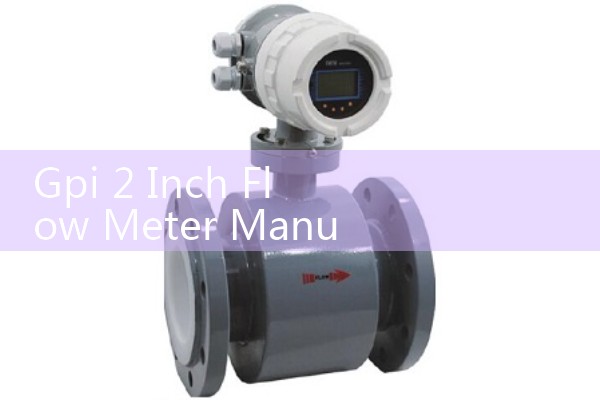
A typical Silver Automation Instruments 2 inch turbine meter for diesel has a K-factor around 45.3 pulses per liter. The exact value depends on the meter construction and the liner. For a 2000 L prover run, that gives about 90,600 pulses. Most modern preamplifiers output a square wave signal. You can connect it to a pulse cou
For internal fuel management, hold error within plus or minus 1.0 percent. For customer billing or custody transfer, hold plus or minus 0.5 percent. If your meter cannot hold these limits after air venting and temperature correction, do not continue using it for billing. Send the rotor and bearing assembly back for inspection. A paint manufacturer in Southeast Asia reused a damaged turbine meter for diesel transfer and found a 2.1 percent error after a month. The damaged rotor was the source.
Installation Problems That Mimic Calibration Drift
Short straight pipe upstream of the meter is a common source of error. For a DN50 turbine meter, keep at least 10 DN of straight pipe before the meter and 5 DN after the meter. That means 500 mm upstream and 250 mm downstream. If you have a control valve close to the meter outlet, move it further downstream. Flow swirl from a partially open valve changes the rotor speed more at high flow.
Here is the thing. Many operators adjust the K-factor to fix an installation problem. This works at one flow rate but not across the full range. Check installation before you touch the K-factor. Last year a mining operation in Peru asked us about a 2 inch turbine meter on a diesel skid. The meter read 1.8 percent high at 1100 L/min. The cause was air accumulation after the filter. A manual air vent fixed the error. No K-factor change was needed.
How Silver Automation Instruments Supports Diesel Transfer Metering
Silver Instruments supplies DN15 to DN200 turbine flow meters for diesel, biodiesel blends, and light fuel oil. 2 inch models can be supplied with pulse output, 4 to 20 mA HART, RS485 Modbus, or a local totalizer. We can also provide calibration certificates and spare rotor assemblies. If your current GPI 2 inch flow meter is out of tolerance, we can suggest a compatible replacement or a repair path.
Send your pressure in bar, temperature in degrees Celsius, pipe size in DN, and flow range in liters per minute. Include the reference fluid and the required accuracy. That is enough for us to recommend a meter and a calibration method. Visit flow-meter.com.au for product data. Tel: +86-25-68650347. WhatsApp: +86-25-52155837. WeChat: +86 15365082610.
FAQ
How often should a 2 inch turbine meter be calibrated for diesel transfer?
Every 6 months for custody transfer. Every 12 months for internal inventory if the diesel is clean and the installation has a strainer and air eliminator.
What K-factor range is normal for a DN50 turbine meter on diesel?
Most 2 inch commercial turbine meters sit between 40 and 60 pulses per liter. A Silver Instruments DN50 diesel meter is often around 45.3 pulses per liter, but use the value on your calibration sheet.
Can I calibrate a GPI 2 inch meter in the field without removing it from the line?
Yes, if you have a master meter or prover tank, a pulse counter, and a way to vent air. You can run the calibration in place. Remove the meter only if repeatability fails after inspection.
What flow range should I use during calibration of a high-volume diesel meter?
Use three flows that match your real transfer range. For a 2 inch loading arm, 400, 800, and 1200 L/min is a practical set. If your normal flow is lower, use 250, 500, and 750 L/min.
Does Silver Instruments supply replacement 2 inch turbine meters with calibration certificates?
Yes. We supply DN50 turbine meters with pulse or analog output, calibration certificates, and optional ATEX Zone 1 or IECEx certification for fuel handling areas.
 Hot Blog
 Related AD