

『Acetylene Flow Meter: Industrial gas cutting and welding regulators.』Related information(clamp on meter|electromagnetic meter|venturi meterrotameter|orifice meter|ultrasonic flow meter|mass flow meter|coriolis mass flow meter|coriolis flow meter|magnetic flow meter|magmeter flow meter|magflow flow meter|mag meter flow meter|electromagnetic flow meter|vortex flow meter|turbine flow meter|thermal mass flow meter|thermal flow meter|rotameter flow meter)
Acetylene Flow Meter: Industrial Gas Cutting and Welding Regulators
Quick Answer: An acetylene flow meter is a low pressure gas instrument installed after the regulator to measure torch gas consumption in L/min or SCFH. Silver Instruments supplies DN6 to DN25 acetylene flow meters with 0.2 to 15 L/min ranges for cutting, welding, and heating torches. Send your gas pressure in bar, temperature in °C, connection size in DN, and flow range to get a quotation within one working day.
Why Acetylene Flow Measurement Is Different
Acetylene is not air, argon, or nitrogen. It is stored dissolved in acetone inside the cylinder. The gas leaves the cylinder at low pressure. Regulators reduce cylinder pressure to 0.5 bar to 1.5 bar before the flow meter. A general gas rotameter with copper wetted parts is not safe for this service. Acetylene can react with copper, silver, and mercury to form explosive compounds. That is why dedicated acetylene flow meters use brass-free wetted parts, steel or aluminum bodies, and PTFE seals. The measurement range also matters. A typical hand cutting torch uses 0.3 L/min to 5 L/min. An air flow meter with a 50 L/min scale will hardly move at these flows. Most technicians then open the valve too far and waste gas. We have seen this happen at a steel yard in Manila.
Key Parameters for Cutting and Welding Setups
We ask for four values on most inquiries: supply pressure in bar, operating temperature in °C, connection size and type, and flow range in L/min. For acetylene service the standard supply pressure is 0.7 bar to 1.5 bar. The temperature usually sits between -10 and 60 °C. The inlet connection is often 1/4 inch BSPP or NPT at DN6 to DN10. For multi-torch headers the size moves to 3/8 inch or 1/2 inch at DN15 to DN25. Accuracy for a mechanical variable area flow meter is ±4% of full scale. That is enough for gas distribution work. If you need a remote signal, we can add a 4-20 mA HART transmitter to the flow meter. In Ex zones the housing can be supplied with ATEX Zone 1 certification on request.
Silver Instruments AFM Series for Acetylene
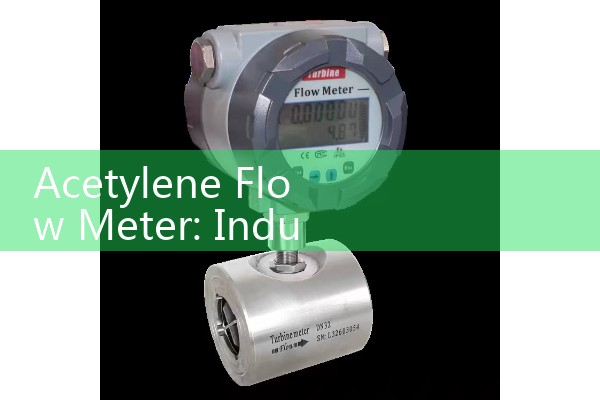
We recommend the AFM series for cutting and welding gas. The AFM-06 covers 0.2 to 2 L/min for small torch tips and brazing work. The AFM-10 covers 0.3 to 5 L/min and fits most single torch cutting rigs. The AFM-15 covers 0.5 to 8 L/min for dual torch welding stations. The AFM-20 covers 1 to 15 L/min for large heating torches and distribution headers. Bodies are aluminum or steel. Wetted seals are PTFE. The scale can be laser etched in L/min, SCFH, or dual units. Threads are available in BSPP, BSPT, or NPT. No copper or silver alloys are used in the flow path.
Installation and Safety Notes
Mount the flow meter vertical, with flow from bottom to top. Install it downstream of the regulator and upstream of the hose to the torch. Use PTFE tape on threads but do not let tape overhang into the flow path. Check all joints with soapy water after start up. Do not use oil or grease on acetylene fittings. If the float sticks or the reading jumps, the meter may be dirty or t
Where We See These Meters Used
In Vietnam a shipyard near Haiphong ordered 40 AFM-10 units for cutting steel plates. Their supply pressure was 0.7 bar and each torch needed 0.3 to 5 L/min. In the UAE a welding fabrication shop ordered 25 AFM-15 meters to monitor six torch stations fed from one acetylene manifold. In Peru a maintenance crew for a mining contractor asked for dual-scale L/min and SCFH because their welders were trained with US units. In Indonesia a gas distributor uses AFM-20 meters on rack supply lines to track cylinder consumption. These sites share one pattern. They start with a regulator only. Then gas cost rises and the manager wants a simple meter that can show exactly how much acetylene each station uses.
How to Request a Quote
Send us four values: acetylene pressure in bar, temperature in °C, pipe size in DN, and required flow range in L/min. If you do not know the exact flow range, tell us the torch model or the number of torch stations. We will recommend a meter from the AFM series. For standard models the delivery time is 5 to 7 days. For special ranges or large orders the lead time is 15 to 20 days after order confirmation. Contact Silver Instruments at Tel +86-135-1213-1526, WhatsApp 86-135-12131526, or WeChat +86 13512131526.
FAQ
What flow range should I specify for acetylene cutting?
For a single hand cutting torch 0.3 to 5 L/min is common. For large heating torches or multi-torch headers 1 to 15 L/min is better. If you are not sure, share the nozzle size and number of torch stations.
Can I use a standard air flow meter for acetylene?
Do not use a standard air flow meter. The wetted parts may contain copper or silver. The flow range is also usually too high. Use a dedicated acetylene flow meter with brass-free materials and PTFE seals.
What connection size is typical?
Single torch systems usually use 1/4 inch BSPP or NPT at DN6 to DN10. Multi point systems use 3/8 inch or 1/2 inch at DN15 to DN25. We can supply BSPT threads for Asian and Middle East installations.
Do you offer electronic output or alarms?
Yes. The mechanical model is standard. On request we can add a 4-20 mA HART transmitter to the AFM-E version. For hazardous areas we can arrange ATEX Zone 1 certification with proper documentation.
What is the delivery time for acetylene flow meters?
Standard range models ship in 5 to 7 days. Large quantities or special ranges need 15 to 20 days. We ship from our Nanjing factory by DHL, FedEx, sea freight, or your forwarder.
Contact: Tel +86-135-1213-1526, WhatsApp 86-135-12131526, WeChat +86 13512131526.
 Hot Blog
 Related AD