

 Current position > Product detail
『300 Ml/Min Flow Meter Fluid Control Loop Programming』Related information(clamp on meter|electromagnetic meter|venturi meterrotameter|orifice meter|ultrasonic flow meter|mass flow meter|coriolis mass flow meter|coriolis flow meter|magnetic flow meter|magmeter flow meter|magflow flow meter|mag meter flow meter|electromagnetic flow meter|vortex flow meter|turbine flow meter|thermal mass flow meter|thermal flow meter|rotameter flow meter)
300 ml/min Flow Meter Fluid Control Loop Programming
Quick Answer: For a 300 ml/min control loop, select a micro Coriolis flow meter with analog 4-20 mA output or a fast pulse output. Wire the signal into a PLC analog input or a high-speed counter. Program the PLC setpoint to 300 ml/min and tune a PI control algorithm. Use proportional gain of 0.8 to 1.2 and integral time of 8 to 15 seconds for typical liquid dosing. For batch control, configure the pulse scaling so the PLC counts each 0.5 ml or 1 ml pulse. Silver Instruments CMF-03 and similar meters deliver the repeatability you need.
Pick the Right Flow Meter for 300 ml/min
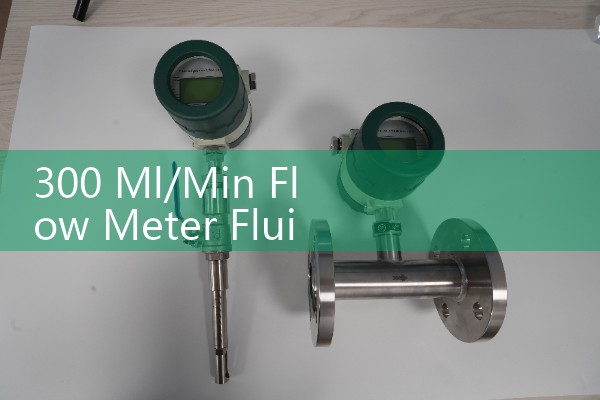
Small flow rates like 300 ml/min demand a meter design built for low velocity. Electromagnetic flow meters often require a minimum conductivity and face signal noise below 0.5 L/min. Turbine meters can work, but bearing wear shifts calibration fast in continuous dosing. Oval gear meters handle viscous fluids well but need clean media to avoid jam. Most engineers in this range choose a micro Coriolis mass flow meter. It measures mass directly in g/min or kg/h and gives density and temperature as extra process data. Silver Automation Instruments supplies the CMF-03 micro Coriolis for flows as low as 0.1 L/min. The meter comes with DN3 or DN6 process connections, PT100 cell for temperature compensation, and 4-20 mA HART plus pulse output. A typical accuracy is +-0.2% of rate at 300 ml/min for water-like fluids.
Typical Industries and Fluid Examples
We see this flow range in chemical injection, additive dosing, and small-batch blending. A paint manufacturer in Vietnam feeds 300 ml/min of hardener into a resin stream. A desalination plant in Oman injects antiscalant at exactly 300 ml/min to protect RO membranes. A dairy in Kenya doses 300 ml/min of rennet into milk tanks. In all these cases, the fluid viscosity ranges between 1 cP and 200 cP. The 300 ml/min setpoint means 18 liters per hour, so a day of production pushes through about 432 liters.
Control Loop Hardware Setup
The simplest loop wires the 4-20 mA flow signal to a PLC analog input card, channels 0 to 10 V or 4-20 mA. You scale the input to engineering units. For a Silver Instruments CMF-03 with a calibrated range of 0 to 600 ml/min, 4 mA equals 0 ml/min and 20 mA equals 600 ml/min. The PLC analog resolution of 12 or 14 bit gives enough granularity. Some engineers prefer the pulse output for volume counting. One pulse corresponds to 0.5 ml. The PLC high-speed counter accumulates pulses and the control logic stops the pump after 300 ml has passed. This method avoids analog noise and does not need PID for batch dispensing. For continuous flow control, you need the analog signal plus a PID instruction in the PLC.
PID Parameters for 300 ml/min Dosing
Most small dosing loops work with a PI controller. Derivative action amplifies measurement noise without benefit because thermal delays are small. Start with a proportional-only test. Set Kc (gain) to 0.5. Bump the setpoint from 0 to 300 ml/min and watch the response. If the flow overshoots above 330 ml/min, reduce Kc to 0.3. If it settles below 290 ml/min and stays there, add integral action. A Ti of 12 seconds often works on flexible tubing and small metering pumps. We have seen on customer sites that a Kc of 1.0 and Ti of 10 seconds gives a steady 300 ml/min within 5 seconds on a peristaltic pump control loop. The time constant of the tubing compliance and pump speed response matters a lot. In practice, tune the loop with the actual process fluid, not just water.
Programming a Batch Control with Pulse Output
Connect the pulse output wires to a PLC fast input. In Siemens S7-1200, configure a high-speed counter HSC1 with external direction control disabled. Set the mode to count. Scaling: one pulse equals 0.5 ml. To deliver 300 ml, the PLC needs a count of 600 pulses. Write ladder logic that resets the HSC accumulator to zero, starts the pump, and compares the current count. When count reaches 600, stop the pump and close a valve. Add a tolerance alarm if the count overshoots by more than 2 pulses. This method works for viscous adhesives, flavors, and catalysts where flow rate fluctuates but total volume must be exact.
Wiring, Grounding, and Noise Avoidance
Keep meter signal cables away from VFD motor cables. Use shielded twisted pair cable for 4-20 mA. Connect the shield only at the PLC ground terminal. For pulse signals with open collector output, install a pull-up resistor of 2.2 kilo-ohm at the PLC input. Power the flow meter from a clean 24 V DC supply. Do not share the supply with solenoids or contactors. If the meter has HART capability, you can read temperature, density, and diagnostic flags via a HART modem or a PLC analog input with HART pass-through. This extra data helps detect bubbles or coating buildup inside the sensor tube.
Common Mistakes and Field Fixes
One mistake is placing the meter right after a pump without a straight run. Micro Coriolis meters do not need long straight pipe, but you must avoid heavy vibration. Fix the meter bracket to a rigid wall. Do not let the pipe stress the meter body. A dairy plant in Australia solved unstable 300 ml/min readings by adding a small back-pressure valve downstream. This device kept the meter tube full and eliminated two-phase flow. Another issue is scaling the analog range too wide. If the meter range is 0-2000 ml/min but you only use 0-300 ml/min, you waste 85% of the signal span. Ask the factory to set the range to 0-500 ml/min or 0-400 ml/min. Silver Instruments can pre-configure this range before shipment.
FAQ
Can I use an electromagnetic flow meter for 300 ml/min?
Most micro magnetic meters need a minimum conductivity of 5 µS/cm and a minimum flow of 0.5 L/min. At 300 ml/min, the signal-to-noise ratio becomes too low for stable control unless you use a specialized micro version with a small liner.
What pipe size fits 300 ml/min?
DN4 (4 mm) or DN6 (6 mm) tubing is common. This size keeps the flow velocity above 0.3 m/s in a Coriolis meter and avoids air pockets. Use push-in fittings or compression fittings rated for your plant pressure.
How do I convert 300 ml/min to kg/h for mass control?
Multiply by the fluid density. For water with density 1.0 g/cm³, 300 ml/min equals 0.3 kg/min or 18 kg/h. With a Coriolis meter, you can select the mass flow output and program the PLC directly in kg/h, which automatically stays accurate even if temperature changes fluid density.
Does the meter need an external power supply?
Yes, most micro Coriolis meters from Silver Instruments require 24 V DC, typically 3 to 5 watts. The loop-powered 4-20 mA output shares the same two wires in typical 2-wire mode for the standard model.
What is the pre-shipment configuration I can request?
When you send an inquiry to Silver Instruments, provide flow range (0 - 500 ml/min), fluid name, density, viscosity, process temperature, and pipe size. The factory sets the span, damping, and pulse value in the meter electronics before calibration. Send us your pressure (bar), temperature (degree C), pipe size (DN), and flow range to [email protected] for a stocked configuration.