

 Current position >About Us
Mag Meter Flow Meters: Flanged Process Plant Water Loop Measuring Equipment
Quick Answer
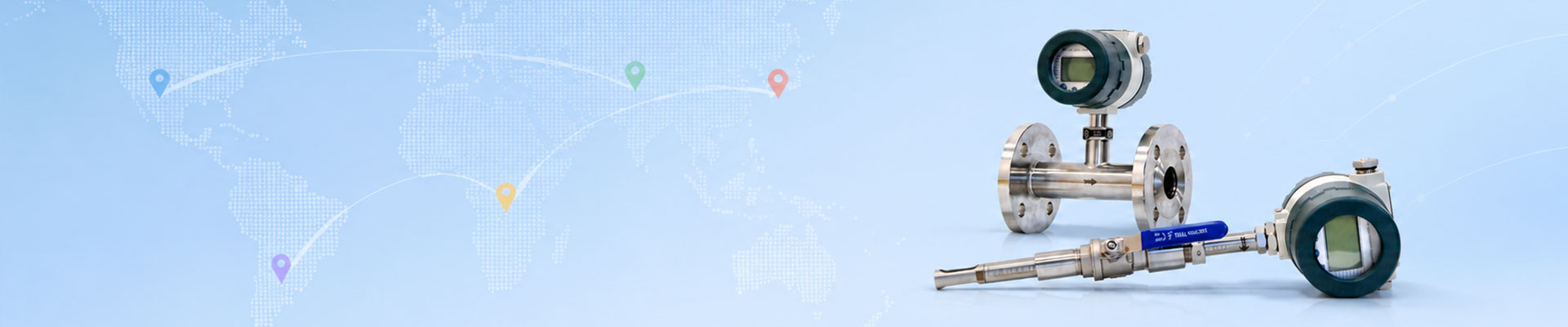
Flanged mag meter flow meters measure water, cooling water, wastewater and conductive process fluids in plant water loops. A flanged mag meter is the practical choice for DN25 and larger lines with PN16, PN40 or ANSI 150 connections. Silver Instruments supplies these meters with 4-20 mA HART, pulse and RS485 Modbus RTU outputs for flow control, batching and pump control.
Why a Flanged Mag Meter Works in Process Water Loops
A magnetic flow meter, also called a mag meter, measures flow by Faraday law. The liquid flows through a magnetic field. The meter reads voltage generated by the moving conductive liquid. Tap water, cooling water, river water, reclaimed water and wastewater are conductive enough for a mag meter. If the conductivity is above 5 µS/cm, the meter works. Process water loops usually stay in the 50 µS/cm to 2 000 µS/cm range, so signal stability is not a problem.
Flange connections matter because plant water loops use pipe flanges to align and seal the line. A flanged mag meter body sits between two flange faces. The bolts and gaskets carry the same pressure as the pipe. This is safer than wafer style meters when the pipe is DN150 or larger and when the loop pressure changes from 2 bar to 10 bar or more. The full bore design has no moving parts, no pressure drop and no filter requirement.
Key Specs We Ask For
When we quote a flanged mag meter for a water loop, we start with these data: pipe size in DN, fluid type, pressure in bar, temperature in °C, flow range in m3/h and output signal. If the plant uses SCADA, we often add RS485 Modbus RTU or 4-20 mA HART. The most common water loop model we offer is the Silver Instruments AMF series flange mag meter in DN25 to DN600.
The standard accuracy is 0.5 percent of reading. For a water loop, that is enough. The liner can be hard rubber for 0 to 70 °C or PTFE for 0 to 120 °C. Electrodes can be 316L, Hastelloy C, titanium or platinum. Most clean water jobs use 316L. Seawater or salty water calls for titanium or Hastelloy C. Pressure ratings are PN16, PN40 and ANSI 150. Ingress protection is IP67, with IP68 optional if the meter is buried or in a flooded pit.
Installation Details Engineers Should Not Skip
Here is the thing. A flanged mag meter is not a drop in instrument if the grounding is wrong. On plastic pipes or internally lined pipes, use grounding rings or grounding electrodes. On bare metal pipes, the built-in grounding electrode may be enough. We have seen this on customer sites many times. A missing ground wire causes unstable readings and ghost flow.
Keep the meter pipe full at all times. Do not install the meter at the highest point of a water loop. Air bubbles collect there and the reading drops. Do not install the meter on a downpipe unless a back pressure valve holds the line full. The flow direction arrow on the meter body must match the pump flow direction.
Straight run is simple. Most engineers skip this part on water loops because the pipe runs are long. But 5D upstream and 3D downstream is enough for standard accuracy. If there is a control valve or pump upstream, allow more straight run. Use pipe supports before and after the meter to avoid flange stress.
Where We See These Meters Used
A water treatment contractor in Vietnam ordered 12 units of DN200 flange mag meters in 2024 for a cooling water loop. The loop ran at 450 m3/h and 4 bar. The meters used hard rubber liner and 316L electrodes. That configuration gave the plant a solid price to performance balance.
A chilled water project in Indonesia used 6 units of DN100 flange mag meters with PTFE liner. The design temperature was 5 to 50 °C. The plant SCADA read flow totals through RS485 Modbus RTU. In the Middle East, desalination plants