

 Current position > Product detail
『Condensate Oil Flow Meter High-Pressure Separation Setup』Related information(clamp on meter|electromagnetic meter|venturi meterrotameter|orifice meter|ultrasonic flow meter|mass flow meter|coriolis mass flow meter|coriolis flow meter|magnetic flow meter|magmeter flow meter|magflow flow meter|mag meter flow meter|electromagnetic flow meter|vortex flow meter|turbine flow meter|thermal mass flow meter|thermal flow meter|rotameter flow meter)
Condensate Oil Flow Meter High-Pressure Separation Setup
Quick Answer
Use a Coriolis mass flow meter directly on the oil leg of a high-pressure separator. The meter reads mass flow in kg/h without density correction. Silver Automation Instruments supplies compact Coriolis meters rated up to PN400 and line sizes from DN15 to DN100.
Why High-Pressure Condensate Measurement Is Different
After a three-phase or two-phase separation vessel does its work at 50 bar, 100 bar, or even higher, the liquid condensate leaves from the bottom. This oil can still carry fine gas bubbles. Its density changes with small shifts in pressure and temperature. A volumetric meter produces a number that drifts because the volume changes with those conditions. Turbine meters and positive displacement meters suffer accelerated wear when gas slugs pass through. We saw this firsthand on a site in Oman where a PD meter needed rotor replacement every 4 months. The plant switched to a Coriolis meter and stopped the mechanical failures.
Why Coriolis Meters Solve the Real Problem
A Coriolis mass flow meter measures mass flow and fluid density directly inside the vibrating tubes. It does not need a separate density meter or a flow computer to correct for base density. You get kilograms per hour, tonnes per day, density in kg/m3, and process temperature from the built-in PT100. All values come over one 4–20 mA HART loop or Modbus RTU. For condensate oil, Silver Instruments specifies 316L stainless steel wetted parts with full penetration butt-weld connections. The standard design handles temperatures from -50 °C to +200 °C and viscosities up to 100 cP. Accuracy stays within ±0.15% of rate even when small amounts of gas slip into the line.
How to Install the Meter on the Separator
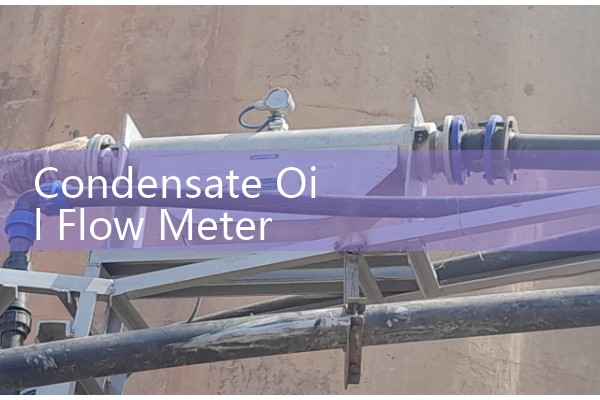
Mount the meter as close to the separator oil outlet as practical. A short piping spool reduces the time for dissolved gas to break out. Install the sensor in a vertical pipe run with flow going upward. This keeps the measuring tubes fully flooded. Avoid horizontal pipes with downward flow because draining can empty the tubes and cause a zero flow condition. The Coriolis meter does not need upstream straight run, so you will save space on offshore skids or compact well pads. For pressures above 250 bar, select Class 1500 or Class 2
What to Send to Get a Quote
To receive a concrete quotation, email your process data. Tell us your normal operating pressure in bar and your maximum pressure. Give us the operating temperature in °C. State the pipe size in DN and the flow range in kg/h or tonnes per hour. Also let us know if you need ATEX Zone 1, Zone 2, or IECEx certification and the preferred process connection type. A typical reply includes a model recommendation, a dimensional drawing, and a price with a 3 to 4 week delivery window. Send these details to [email protected] and mention the separator setup.
Frequently Asked Questions
Why not use an orifice plate meter for high-pressure condensate?
Orifice plates need frequent inspection and the sharp edge wears with dirty condensate. You also need a separate density measurement to get mass flow. A Coriolis meter eliminates both the wear issue and the density compensation step.
Do Coriolis meters work if gas bubbles are present?
Yes. They manage small amounts of free gas better than any other meter type. The device keeps mass flow accuracy within 1 to 2 percent with gas volume fractions up to about 10 percent. This is a key reason operators pick Coriolis for the oil leg of a separator.
What pressure rating is typical for these meters?
We supply from PN40 up to PN400. Most condensate applications land between PN100 and PN250. Our standard flange ratings cover Class 600 through Class 1500 as needed.
Can the meter measure condensate and water together?
Yes, the meter measures total mass flow. You can use the live density signal to detect when water breakthrough happens. For net oil calculation, pair the meter with a water cut analyzer and the flow computer handles the math.
How do I prevent blockage from wax or sand?
Keep the fluid above its wax appearance temperature. Use a small heat tracing line on the meter body if the ambient temperature is low. For sandy flow, choose a straight-tube Coriolis design with no internal obstructions. Silver Automation Instruments offers both bent-tube and straight-tube models depending on your solids loading.