

 Current position > News detail
『Lowrance Fuel Flow Meter: Marine Sensor Integration for Real-Time Vessel Dashboards』Related information(clamp on meter|electromagnetic meter|venturi meterrotameter|orifice meter|ultrasonic flow meter|mass flow meter|coriolis mass flow meter|coriolis flow meter|magnetic flow meter|magmeter flow meter|magflow flow meter|mag meter flow meter|electromagnetic flow meter|vortex flow meter|turbine flow meter|thermal mass flow meter|thermal flow meter|rotameter flow meter)
Lowrance Fuel Flow Meter: Marine Sensor Integration for Real-Time Vessel Dashboards
Quick Answer: Lowrance fuel flow meters use turbine or paddlewheel sensors that output pulse signals to NMEA 2000 networks, letting you see fuel burn rate, total consumed and remaining fuel on a Lowrance HDS or Simrad multifunction display. For commercial vessels and workboats where diesel fuel viscosity changes, high vibration is present or corrosive seawater is measured, Silver Automation Instruments supplies oval gear flow meters and electromagnetic flow meters that deliver 4-20 mA HART or pulse to the same dashboards via a converter.
Marine electronics have moved far past simple needle gauges. A crab boat operator out of Geraldton, Western Australia told us he used to dip a tank stick every six hours. Now he glances at a Lowrance HDS Live screen and sees engine fuel rate in litres per hour, totalised consumption since the last fill, and an alarm if a fuel line leaks. That is the real-world difference a integrated flow sensor makes.
Lowrance themselves do not make flow meters. They sell the network backbone, the display and the NMEA 2000 fuel data manager. The actual sensor is often a third-party device like the Lowrance-branded EP-60R or EP-85R fluid flow sensor, which is a small turbine that spins in the fuel line. A pickup measures each revolution and sends a pulse. The display does the maths. Simple and light, perfect for a recreational angler.
In practice, things get complicated when you move to commercial marine. A tuna longliner in Fiji running twin MAN engines on MGO burns 45 litres per hour at 1,500 rpm. The standard Lowrance turbine sensor has a GPM range that clips early. You need a bigger sensor body, DN15 or DN20 threaded or flanged connections, and a signal conditioner that outputs NMEA 2000 sentences or at least a 4-20 mA signal that a Lowrance adapter can read. Most engineers skip this part: the Lowrance NMEA 2000 network can accept 4-20 mA if you install an analogue-to-NMEA gateway like the RD-33 or an AIM module. Then any industrial flow meter with current output can feed data to the dashboard.
Here is the thing. Silver Automation Instruments has supplied this exact setup to a diesel service barge operator in Lagos, Nigeria. They replaced five EP-60R sensors that kept jamming on diesel sediment with our oval gear flow meters model OGF-P. Oval gear meters handle diesel fuel with viscosity from 2 cP up to 2,000 cP without a hiccup. The OGF-P delivered a pulse output, the crew connected it to a pulse-to-NMEA2000 gateway, and the Lowrance display showed fuel flow to the generators. The downtime from clogged turbine sensors dropped to zero over six months.
When the measured fluid is seawater, for instance a desalination plant intake on a passenger ferry in Bohol, Philippines, turbine pulse sensors fail fast. Salt crystals, marine growth and constant humidity eat the bearings. Silver Instruments electromagnetic flow meter model EMF-AR, DN25, PTFE liner and titanium electrodes, sends 4-20 mA HART plus pulse to the vessel automation panel. The Lowrance dashboard can pick up the signal via the gateway. No moving parts, no bearing to replace. The ferry chief engineer we spoke to now asks for a quote with this exact spec: pressure 6 bar, temperature 28 °C, pipe size DN25, flow range 0 to 3,600 L/h.
That request format is exactly what our application engineers need
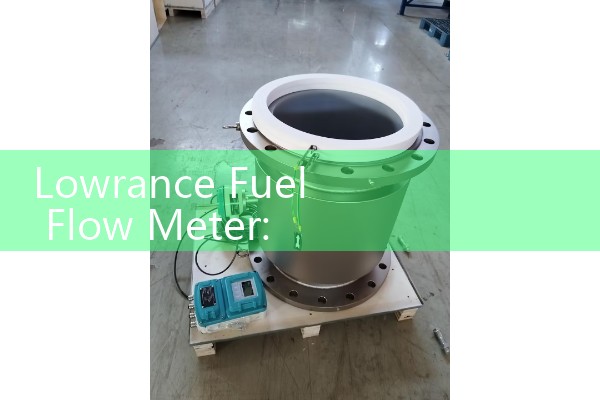
Fuel return line measurement is another blind spot. A diesel engine returns hot fuel from the injectors to the tank. Two Lowrance sensors, one on the supply line and one on the return, give net consumption by subtraction. But many installers use two identical turbine sensors and ignore the temperature drift. At 80 °C fuel return temperature, the sensor accuracy shifts by up to 2%. Oval gear flow meters from Silver Automation Instruments hold ±0.5% of reading from -20 °C to 120 °C fluid temperature. An operator in Surabaya, Indonesia, saw his net fuel consumption data match the bunker receipt within 0.7% after swapping to our OGF-S dual meter kit.
So if you are building or retrofitting a vessel dashboard with Lowrance electronics, think beyond the simple recreational sensor. Our magnetic flow meters, oval gear meters and vortex flow meters for steam or cooling water all output standard industrial signals. You can integrate them into NMEA 2000, CAN bus J1939 or a PLC on board.
FAQ: Lowrance Fuel Flow Meter Installation and Signal Integration
Q: Can a Lowrance display read a 4-20 mA flow meter directly?
A: Not directly. A Lowrance NMEA 2000 network needs a gateway that converts 4-20 mA to NMEA 2000 PGNs. Devices like the Lowrance EP-85R or a third-party analogue adapter do this job. Silver Instruments supplies flow meters with 4-20 mA HART output and can help specify the correct gateway.
Q: Which flow meter works best with Lowrance for diesel fuel consumption on a small tug?
A: An oval gear positive displacement meter with pulse output works very reliably. The OGF-P DN15 from Silver Automation Instruments gives a pulse every 0.46 ml, which a pulse-to-NMEA converter can transmit to the Lowrance display. It handles diesel viscosity variations without drifting.
Q: Can I use one Lowrance fuel flow sensor for seawater cooling measurement?
A: Not recommended for long-term use. The turbine bearing will corrode quickly. Use an electromagnetic flow meter with no moving parts and a 4-20 mA signal for seawater. The EMF series with PTFE liner suits this well.
Q: What is the maximum fuel flow rate a Lowrance EP-60R sensor can measure?
A: Typically 15 to 130 L/h depending on the model. For engines that burn 200 L/h or more, you must move to an industrial flow meter with larger bore. A DN20 oval gear flow meter can cover up to 3,000 L/h and still output a clean pulse for the Lowrance network.
Q: How do I connect a Silver Instruments flow meter to a Lowrance HDS dashboard?
A: Connect the flow meter pulse or 4-20 mA output to a NMEA 2000 gateway, configure the PGN mapping, and the data will appear on the HDS engine page. Our technical team provides wiring diagrams specific to the flow meter model and gateway brand.
Email the details of your vessel project to [email protected]. Reach us by phone or message at Tel: +86-25-68650347, Whatsapp: +86-25-52155837 or WeChat: +86 15365082610. Tell us your fluid type, pipe size, flow range and required output. We will propose a marine-proven flow meter that integrates with your Lowrance, Simrad or B&G dashboard.